AI Flavor Handbook
Find what makes your draft sound like AI, and fix it
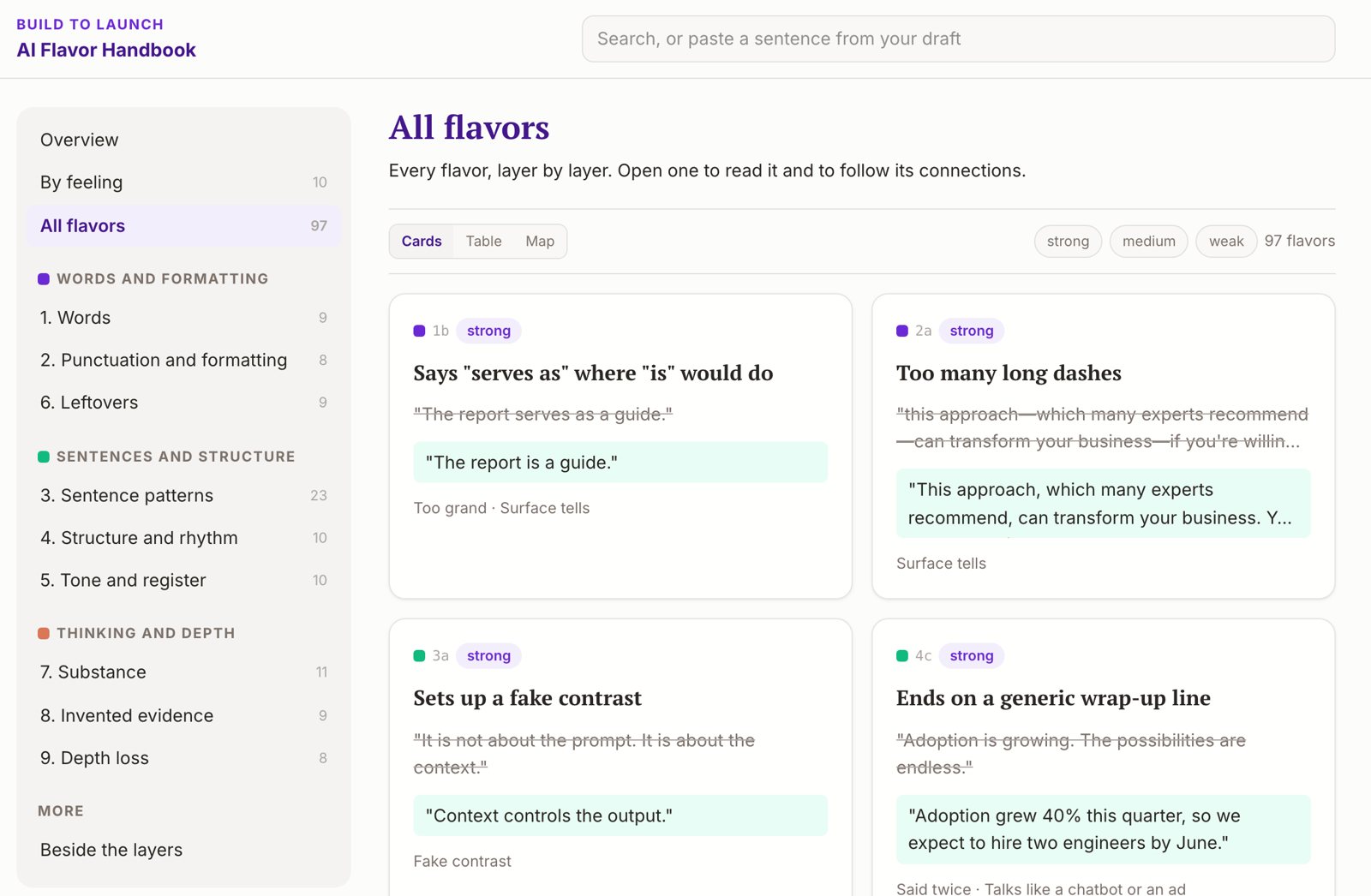
97 habits of machine-made writing. Each one has a plain name, what to look for, the fix, and a before-and-after. Read it in your browser, one flavor at a time.
Try it on your own draft
Paste a few sentences. This page checks them against the handbook's phrase lists, right here in your browser. Nothing is sent or saved.
Here's the thing: in today's fast-moving landscape, content isn't about quantity, it's about quality. Let's dive in.
What the handbook would flag
A word AI writing overuses
Sets up a fake contrast
Announces the point instead of making it
Acts casual instead of being specific
The fix, the before-and-after and what not to flag for each one are in the handbook. Get your copy
Why a banned-words list is not enough
AI drafts come back smooth, and readers still notice. The same fake contrast, the same grand opener, a claim with nothing behind it. Each one hands the reader work the writer skipped: they have to guess what you meant, or decide whether to trust you.
A list of banned words catches “delve” and “tapestry”. It misses the sentence shapes, the empty claims and the depth a draft lost on the way. The handbook covers all nine layers, from single words to the thinking.
New to the nine layers? Start with the free guide: How to Make AI Writing Sound Human.
Before and after
Every flavor comes with examples like these.
Sets up a fake contrast
"It is not about the prompt. It is about the context."
"Context controls the output."
Uses a fancy word for a plain one
"This file empowers users to create more authentic writing."
"This file tells the model which habits to avoid before it writes."
Weighs both sides, picks neither
"Writers must balance efficiency with authenticity."
"Use AI to clean the draft. Do not let it remove the fingerprints."

Built from real checks
Jenny Ouyang, Build to Launch. This is the library I check my own drafts against.
- The same library runs my own drafting checks and the AI Writing skill on the Build to Launch MCP.
- Every automated question was tested on labelled samples before I trusted it: 92% for misused tables, 91% for comparison tear-downs, 88% for stock closing lines, 81% to 85% for inflated significance. The questions that failed stay off.
- Many flavors come with a “Do not flag” list, so you keep the lines that only look like AI and protect your own voice.
Three ways in
Start from a layer
Nine layers, from single words and punctuation to empty claims and lost depth. Read one layer at a time.
Start from a feeling
Too grand, said twice, no position. Pick what your draft feels like, ask its one question, and check only those flavors.
Paste a sentence
The search marks the phrases that give a draft away and shows the flavor behind each one.
What's inside
- 97
- flavors, each with a plain name you can remember
- 9
- layers in three groups, from the surface to the thinking
- 10
- feelings to start from when you can't yet say what is wrong
- 1
- page of rules for fixing a draft without making it sound worse
Get your copy
Use the email of your Build to Launch newsletter subscription. I'll send you the link.